How to limit your exposure to scams
Topics covered:
Reduce unwanted calls: Register your number on the National Do Not Call (DNC) Registry
Filter unknown numbers: Activate your phone's built-in spam filters
Don't say "hello" right away when answering unknown calls
How to stop marketing and other junk mail
Freeze your credit and protect your SSN
In our previous article, "Common scam tactics and warning signs in America: What everyone should know", we broke down the most common scam tactics and red flags that you need to watch out for. But spotting a scam is only half the battle - the best defense is preventing it from reaching you in the first place.
While you can't eliminate scam attempts entirely, shrinking your digital and physical footprint can dramatically decrease the number of phishing attempts, robocalls, and fraud attempts that reach you. Here are 5 practical steps you can take to better protect your personal information and reduce your exposure to scams.
1. Reduce unwanted calls: Register your number on the National Do Not Call (DNC) Registry
Register your mobile and home numbers on the National Do Not Call Registry, which is managed by the Federal Trade Commission (FTC). Registration is free and an essential baseline step. The registry will not stop illegal scammers, but it does prevent most legitimate telemarketers and many domestic companies from calling you.
Under the Telephone Consumer Protection Act (TCPA) and Federal Trade Commission (FTC) guidelines, businesses must abide by
Mandatory DNC list scrubbing: Legitimate businesses must compare their calling lists with the DNC Registry at least once every 31 days and remove registered numbers.
Robocall restrictions: Businesses are forbidden from placing telemarketing robocalls or using pre-recorded or artificial voices to reach mobile phones without prior consent.
Businesses that violate these rules may face substantial penalties. Under the TCPA, consumers may seek damages of $500 per illegal call or text, or up to $1,500 per call or text if the violation was willful or knowing. The FTC may also pursue additional civil penalties and enforcement actions.
Important: The DNC Registry does not block calls from political organizations, charities, survey companies, purely informational services (such as airline notifications), or businesses with which you have had a recent relationship.
2. Filter unknown numbers: Activate your phone's built-in spam filter
Scammers rely on volume, sending thousands of automated calls and texts daily. Stopping those notifications before your phone even rings removes the initial prompt to answer.
Here's how to activate your phone's built-in spam filter:
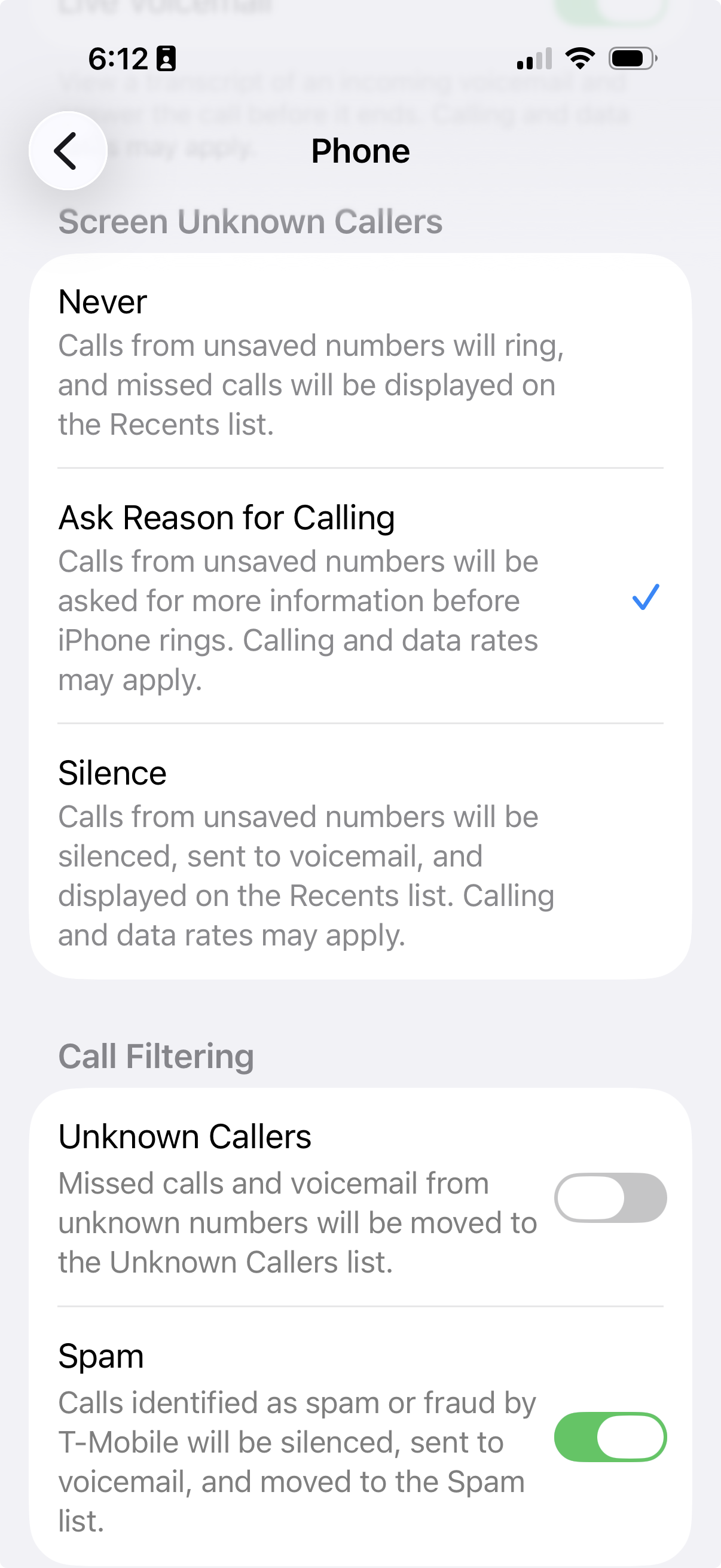
iPhone (iOS): Go to Settings > Apps > Phone and turn on the Call Filtering function for “Spam” and/or "Unknown Callers". You could even screen unknown callers by having your phone ask the caller the reason for calling, or have calls sent straight to voicemail.
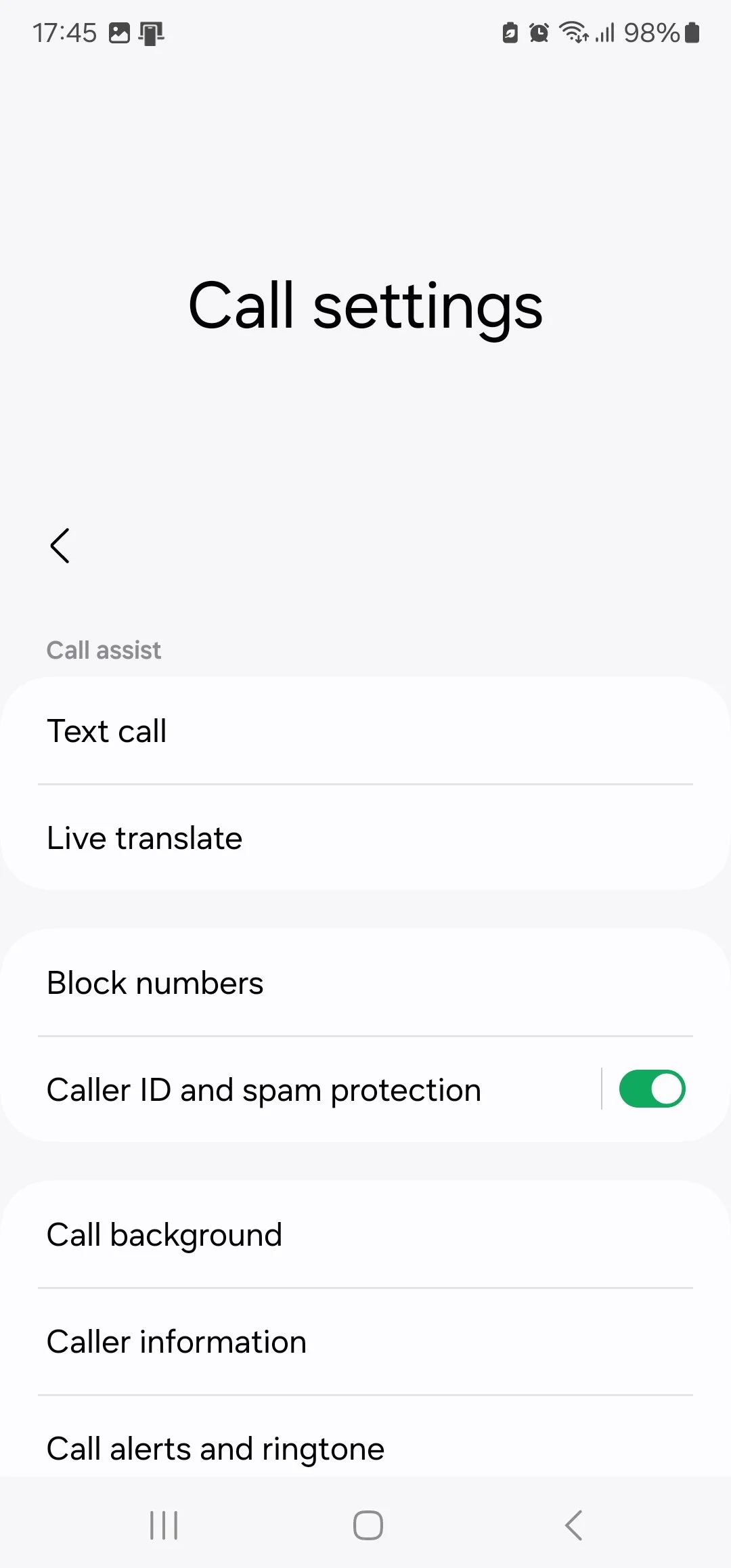
Android: Open your Phone App > Settings and turn on “Caller ID & Spam Protection.” This automatically flags or silences calls suspected of being spam.
Carrier Apps: Most major network providers offer free spam and scam protection that blocks known scam numbers at the network level, before they reach your device. You can activate these features directly through your carrier account or by downloading these apps:
AT&T: ActiveArmor
Verizon: Call Filter
T-Mobile: Scam Shield
3. Don't say "hello" right away when answering unknown calls
If you happen to answer the call from an unknown number that got past your filters, do not speak immediately.
Automated dialers call dozens of numbers at once and only assign a live representative or trigger a recorded voice once they detect human verbalization via Voice Activity Detection (VAD) technology. Do not go "hello?". Instead, stay silent for 2 to 3 seconds (or fake a quick cough). If it's a robocall, the automated system will fail to detect human speech and usually disconnect automatically.
Answering and speaking right away marks your phone line as "active," thereby ensuring you get more spam calls in the future.
4. How to stop marketing letters and other junk mail
Scammers don't just rely on phones; they also raid physical mailboxes for credit card offers or use publicly available address databases for mail fraud. You can cut off paper junk mail using these official services:
DMAchoice.org: Managed by the Association of National Advertisers, registering here ($2–$5 processing fee) puts your address on a national opt-out list for 10 years, drastically cutting down catalog and direct-mail marketing.
Catalogchoice.org: A free nonprofit service that lets you opt out of unwanted catalogs and direct mail from individual brands, one at a time.
5. Freeze your credit and lock your SSN
The ultimate line of defense against financial identity theft is freezing your credit report and locking your Social Security Number (SSN).
Freezing your credit prevents anyone - including scammers who have obtained your SSN - from opening new loans, credit cards, or accounts in your name.
For a complete walkthrough, read our guides on how to lock your credit report and how to lock your SSN for free.