Want to gain a thorough understanding of US tax laws? Skip TurboTax/H&R Block- file taxes the manual way
Topics Covered:
US federal tax vs MA state tax
Speed of filing vs depth of understanding: Benefits of not using a tax software
File your federal tax for free: Use Free File Fillable Forms
File your MA state tax for free: Use MassTaxConnect
If you wish for a genuine understanding of the American tax system, one of the best things you can do is step away from shortcuts like TurboTax and H&R Block and try filing your taxes manually.
While these tools are convenient, they often mask the inner workings of how your income, deductions, and credits actually flow through a tax return. Filing by hand forces you to slow down, read each section, and understand why tax agencies ask for certain information. It’s a hands-on approach that builds confidence and equips you with foundational tax literacy that becomes invaluable should you one day decide to start a business, invest, or diversify your income.
1. US federal tax vs MA state tax
If you’re from abroad and have always just filed one set of tax documents back home, know that here in the US, there are two sets of taxes to be filed: federal and state.
Federal Taxes are national-level taxes collected by the Internal Revenue Service (IRS) that go to the central government. Regardless of state, every US citizen and permanent resident who derives an income above a certain threshold is required to file.
State Taxes are paid to the state in which one resides, or in some cases, derives income. In Massachusetts, state taxes are collected by the Massachusetts Department of Revenue (DOR). The threshold to file - regardless of whether you are a full-year resident, part-year resident, or non-resident - is $8,000 (2025) or more. Massachusetts has a graduated tax system: 5% on individual income tax, with an additional 4% on income over $1,083,150 (2025).
2. Speed of filing vs depth of understanding: Benefits to a manual filing
There are obvious benefits to using tax softwares like TurboTax and H&R Block- for one, they have great UX/UI, and the process is simplified through targeted Q&As. It allows one to file with speed.
However, if you are of a curious mind and would rather have a deeper understanding of the American tax system, understand the "why" behind the "what" and know how things are structured so that you could proactively position yourself for the future, here’s my advice: skip the tax software and go with a manual filing.
I handled my own taxes in the early years of being in the US. It was tedious, but the hands-on experience gave me a solid grasp of the tax system - insight that proved invaluable when it came time to structure my business.
Key lessons that stood out:
Different corporate structures produce different categories of income, each subject to distinct tax rules. The S-Corp structure has both W-2 and self-employment income for owner-employees. Net earnings can be taken as distributions.
Diversifying your income can also diversify your retirement savings options. Earning both W-2 and self-employment income opens the door to multiple types of retirement accounts, which in turn increase the total deductions and tax-advantaged contributions available.
The tax code provides significant incentives for real estate investment. Depreciation deductions, expensing operating costs, capitalizing improvements, tax-deferred growth, etc. It is clear that generational wealth is built through real estate holdings.
Ultimately, tax policy reflects national priorities. By understanding how the US tax system is structured, you gain insight into what the country incentivizes and how to position yourself strategically within it.
3. File your federal tax for free: Use Free File Fillable Forms.
Yes, there is a way to file your taxes with the IRS for free regardless of income level. The answer is Free File Fillable Forms.
Despite common fears, the process is far less intimidating than it seems. The IRS provides an instructional booklet that includes a clear, line-by-line explanation for every field and calculation. With patient reading, you can follow along and learn as you go.
Newcomers to the US, note that before filing, you should have:
US Phone number. You’ll need it for account verification. Read this if you need a US number.
Social Security Number (SSN) or Individual Taxpayer Identification Number (ITIN). Read this about obtaining an SSN/ITIN.
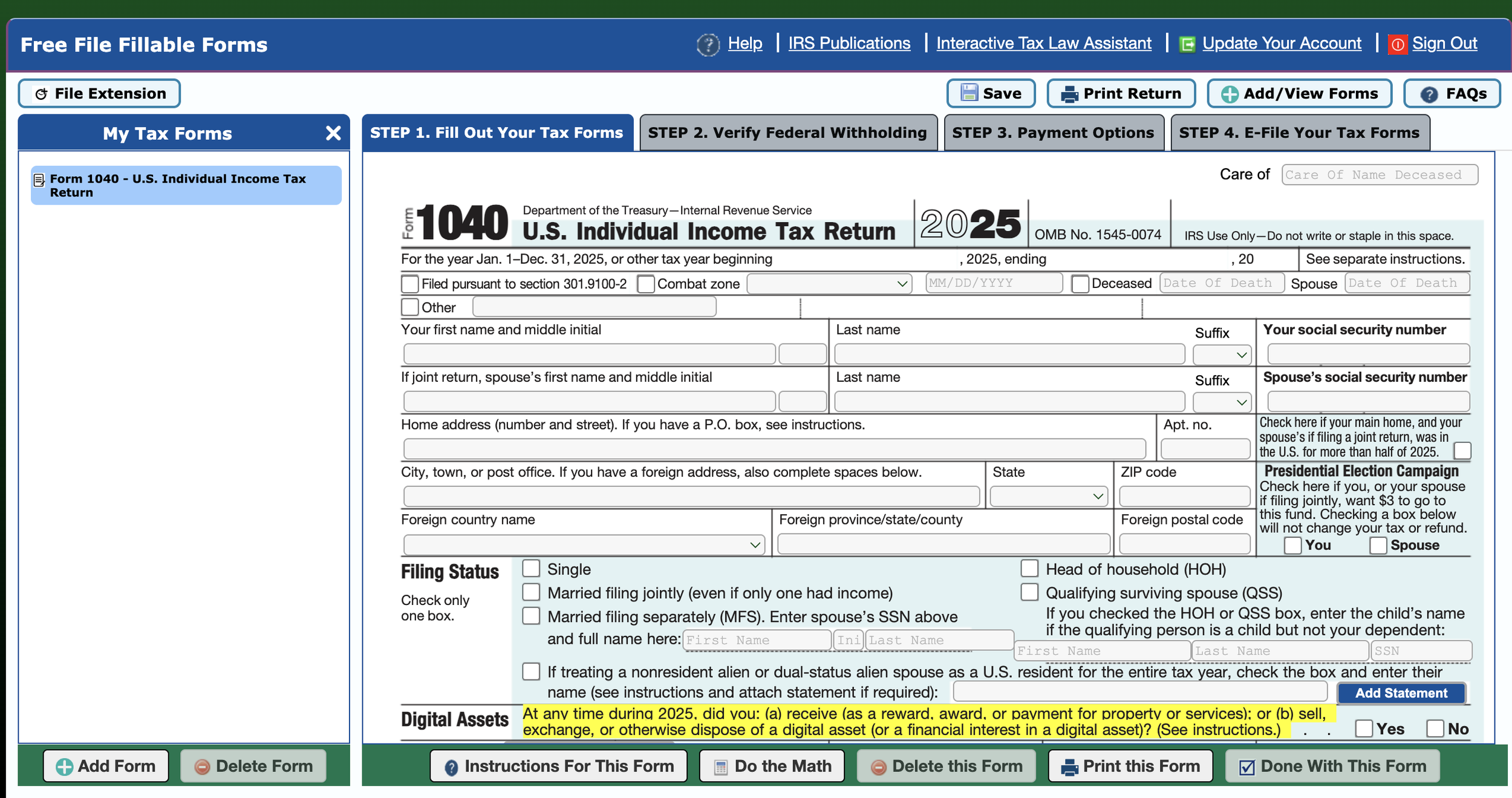
This is what Free File Fillable Forms looks like. It’s a digital version of the actual tax form to be filled.
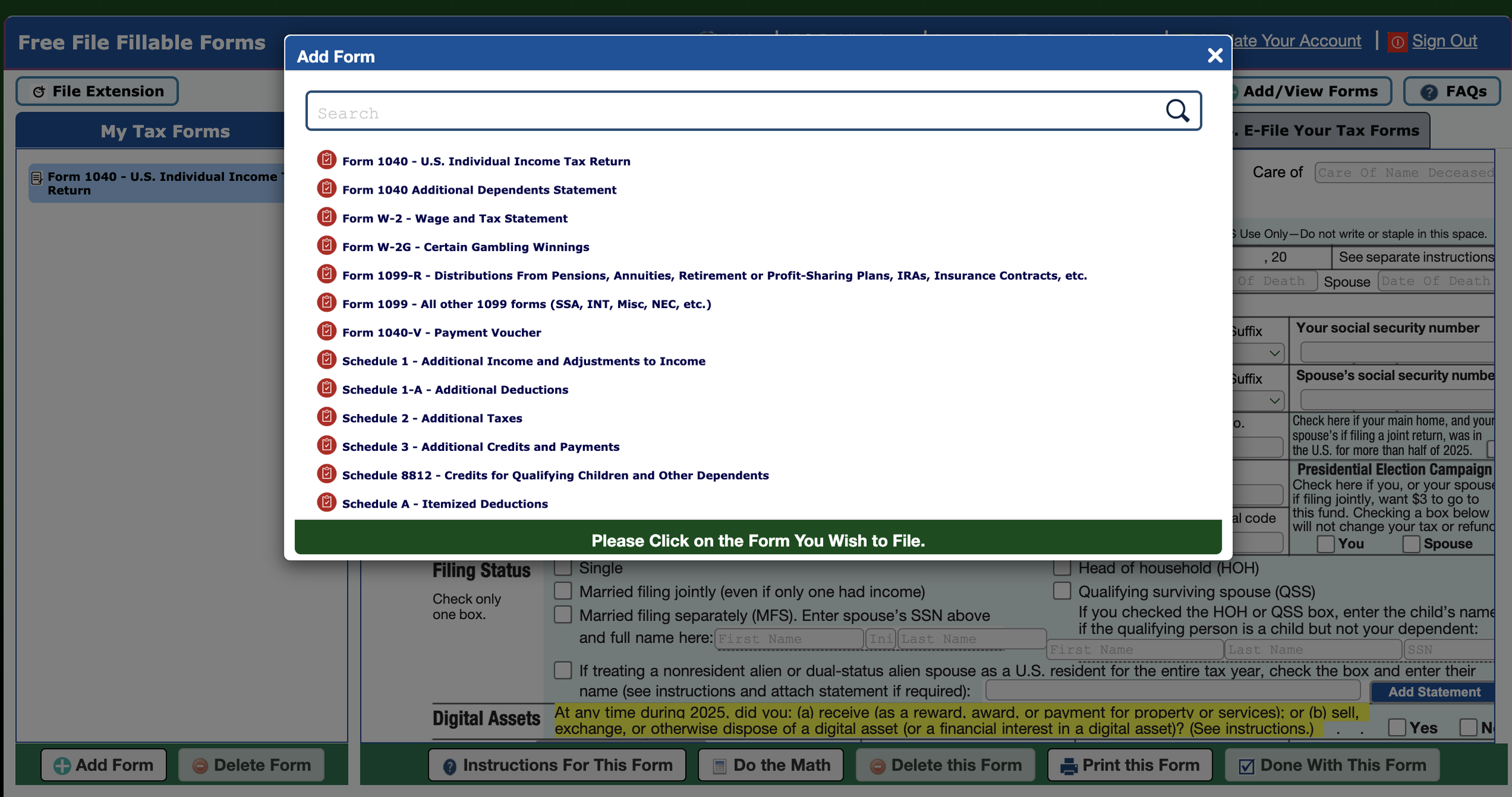
Additional forms, e.g., Form W-2 and Schedule C, can be easily added to the overall tax filing. Fields in the additional forms are at times integrated with the main form (Form 1040), which allows the numbers to be carried over.
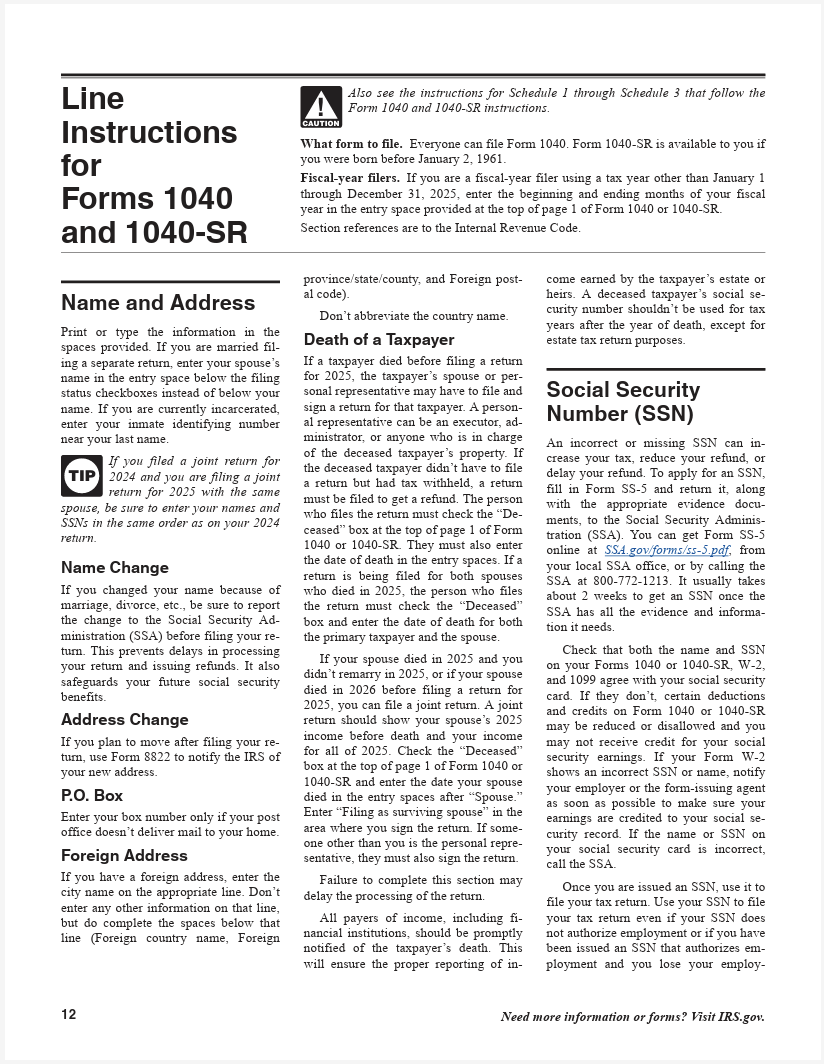
There is a clear button to open the instruction booklet for every form, in which there are line instructions.

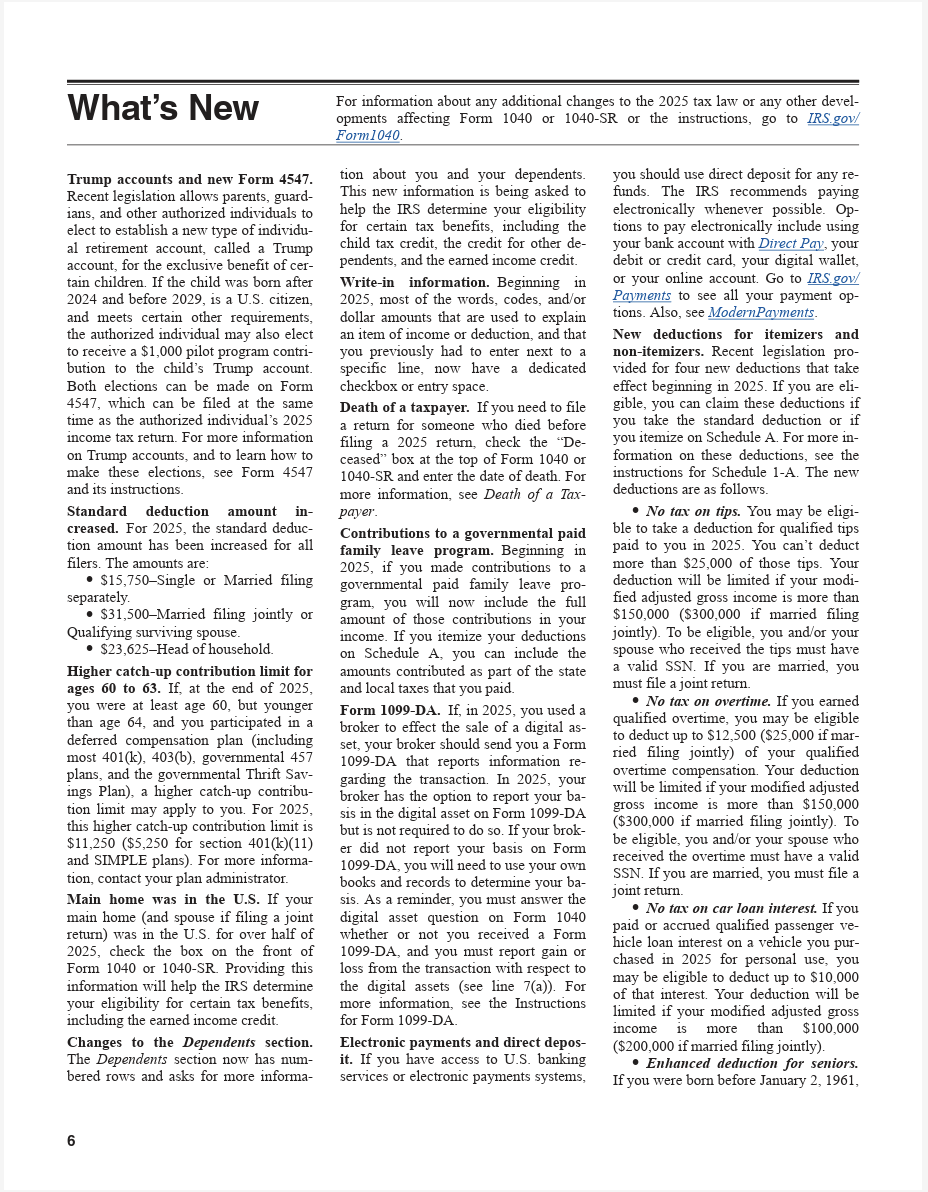
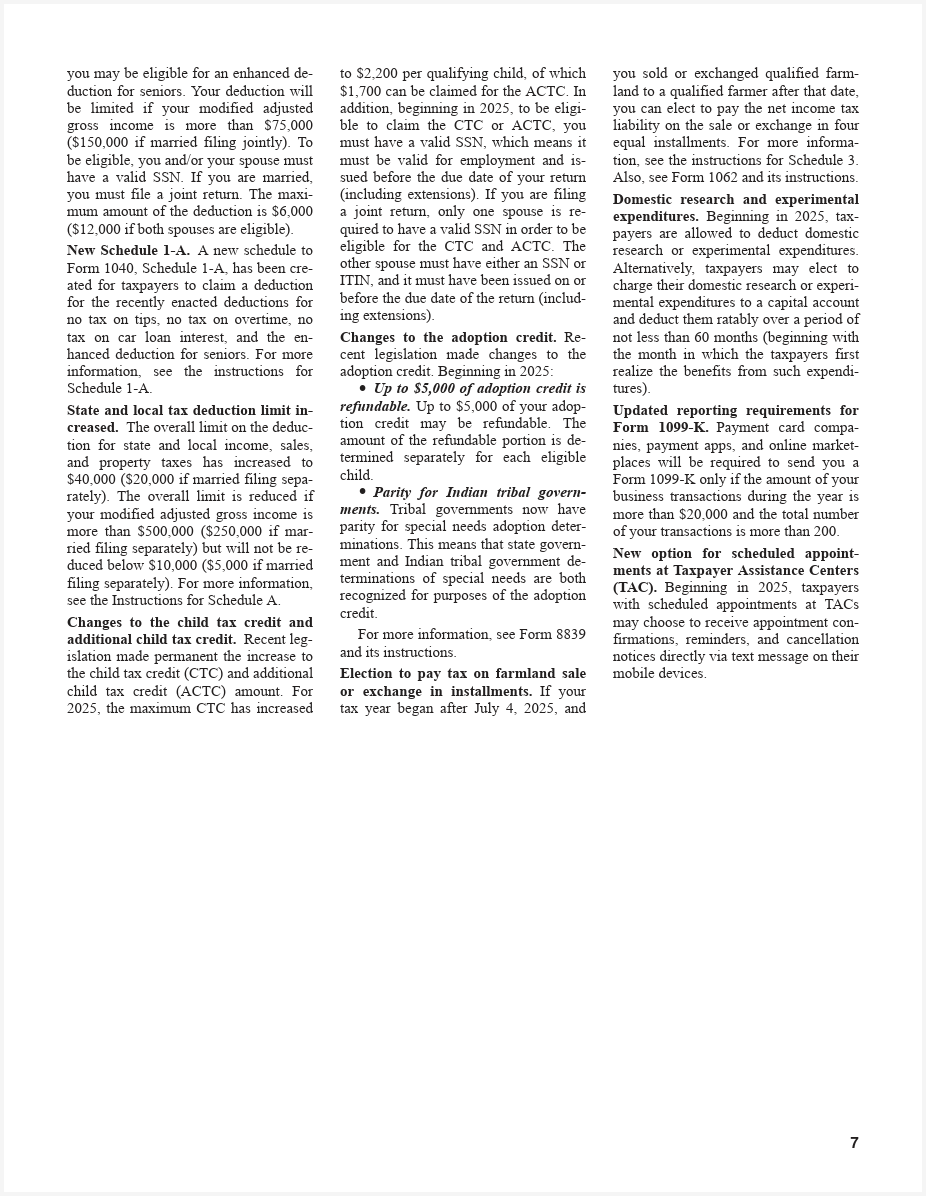
I never skip reading the What’s New section, and you shouldn’t either. Here is where campaign promises and media news get filtered into tangible national policy that impacts your bank account.
4. File your Massachusetts state taxes for free: Use MassTaxConnect
File your federal taxes before working on MA state taxes as you’ll need numbers from your federal tax form to complete your state tax return. Once you’re ready to proceed, you’ll find that filing state taxes is a much simpler process.
MassTaxConnect is where one goes to file MA state taxes. It’s the official state platform where one could file directly with the Massachusetts Department of Revenue (DOR). There is no charge to file through MassTaxConnect.
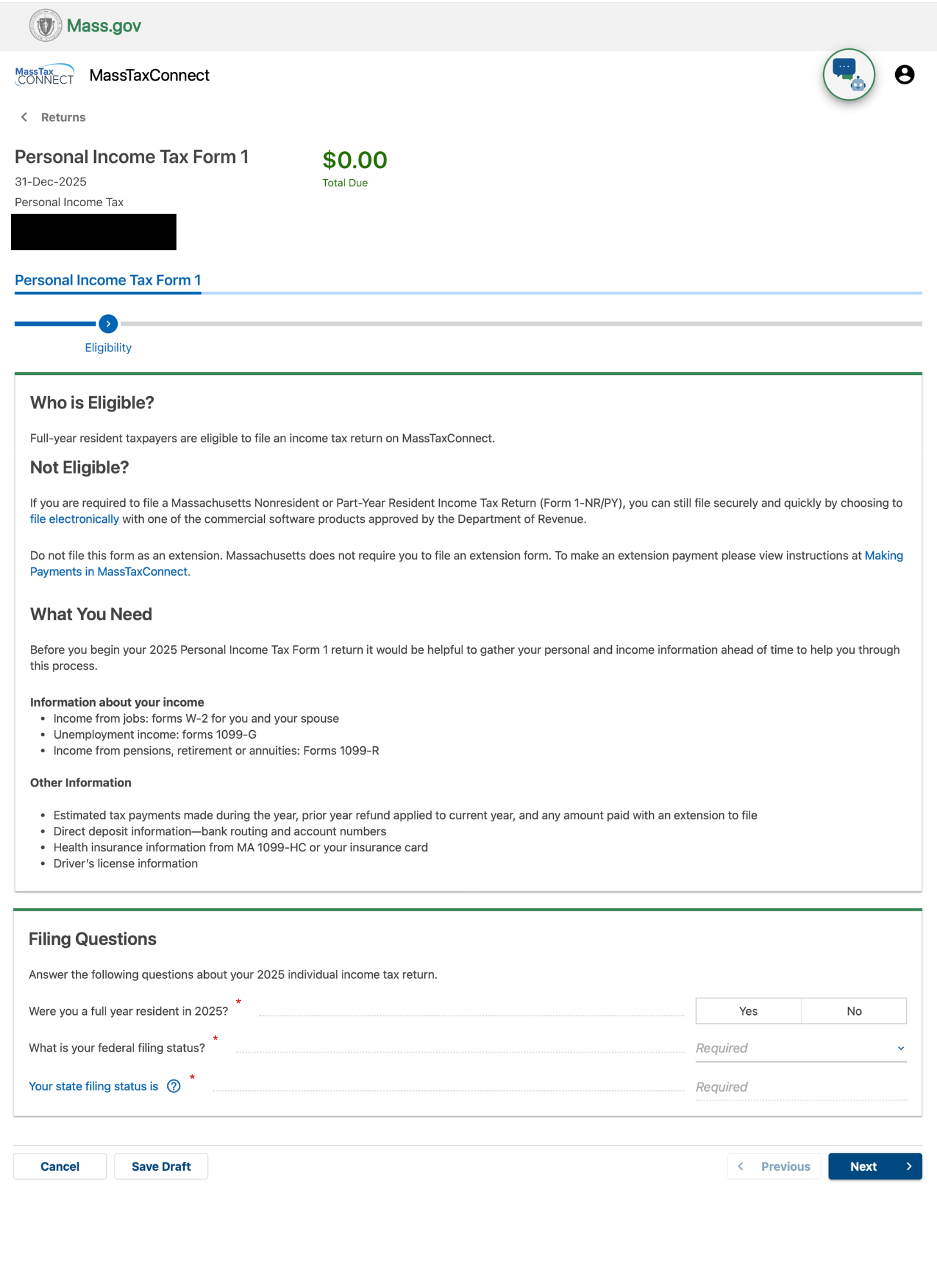
It’s a series of Q&As, with a UX/UI that is way better than Free File Fillable Forms.
Some differences you’ll notice between filing federal vs MA state taxes:
Income categories. MA classifies certain types of income (e.g., capital gains) differently from the IRS.
Deduction divergence. Some items that are deductible on the federal return may not be deductible on the MA return, and vice versa.
Flat vs graduated taxes. While the IRS uses tax brackets, MA primarily uses a flat tax rate - 5% on individual income tax, with an additional 4% on income over $1,083,150 (2025).
Looking to maximize your tax deductions through investing in real estate? Schedule a consult with Joan or visit her website for real estate insights.