Things we think are normal in Boston (but aren't)
Topics covered:
Boston’s Dunkin dependence
Seasonal chaos (Storrowing & Allston Christmas)
Local-only sports & food (candlepin + steak tips)
Rotaries and the Boston Left
Boston's nickname culture and town pronunciations
Why Boston cream pie is not a pie
If you grew up in Boston or lived in Boston long enough, you might think it's perfectly reasonable (fun even!) to go furniture-shopping on a sidewalk in September. Dunkin' becomes your default beverage, and you occasionally risk it to "jump" a left turn at a green light.
Here are the everyday things Bostonians do that make outsiders think that we've lost our minds.
1. The Dunkin' Dependance ☕
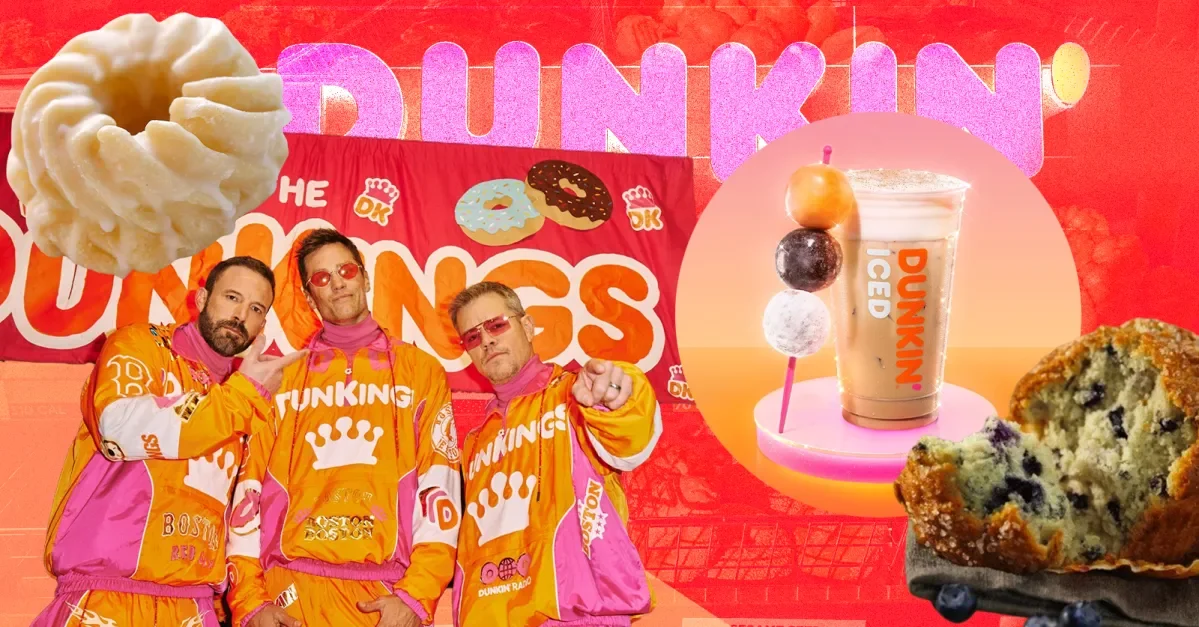
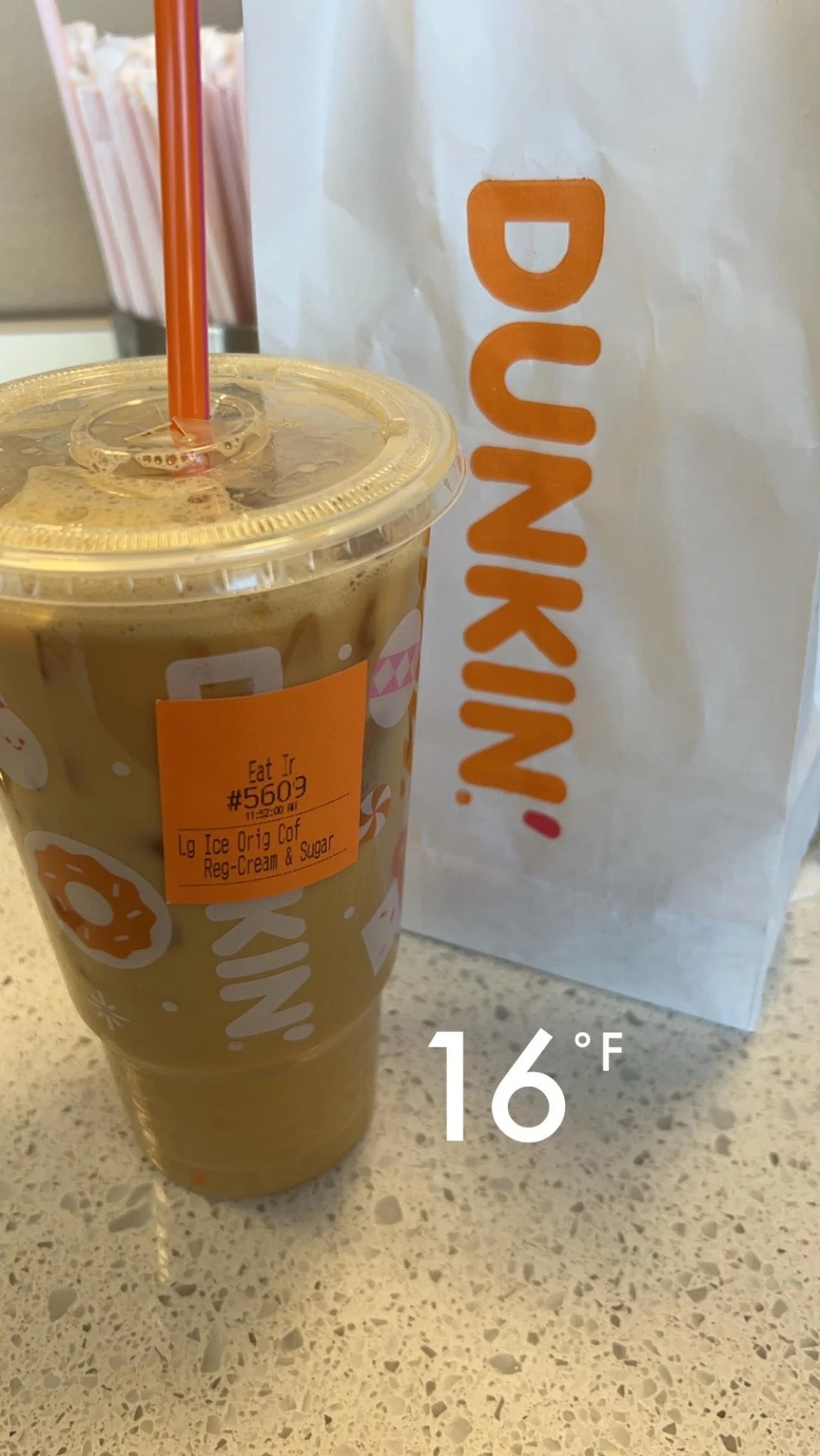
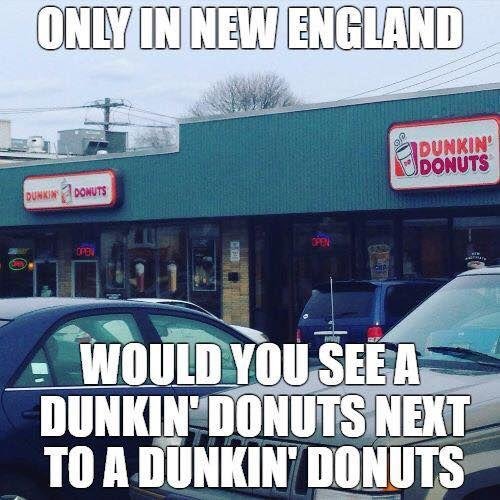
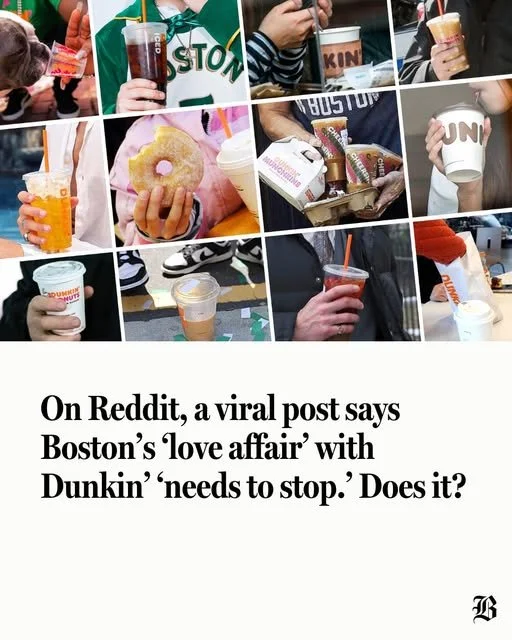
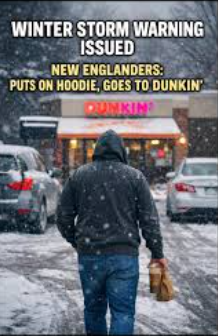
In most of America, Dunkin' Donuts is a place one goes for a donut or a coffee. In Boston, it's "Dunks", it's a geographical landmark, personality trait, and a primary food group... only fair since it was founded in Boston and still headquartered in Canton. Boston's Dunkin' loyalty runs deep.
It is completely normal to spot three or four Dunkin' shops within the same block and still have a "favorite" one. One of the wildest realizations you'll have is this: no matter the weather in Boston, there is always someone drinking a large iced coffee in shorts.
January blizzard? Iced.
August heat wave? Iced.
Note for those calorie-conscious: a "regular" coffee in Boston means two creams and two sugars.
We can’t confirm that "America runs on Dunkin'," but Boston definitely does.
2. Seasonal Chaos: Storrowing & Allston Christmas 🚚
High concentration of colleges plus old road infrastructure equals recipe for disaster. In the case of Boston, this translates to a logistical meltdown between late August to early September. No worries though, there’s joy to be found.
Allston Christmas
If you’ve read our prior article on 15 places to get creative with furniture purchases, you’d know that Allston Christmas is the time of the year when thousands of students move out and leave curbside "treasures" all over the city. To Bostonians, it’s a joyful free furniture bazaar. To anyone else, it is a sanitation nightmare.
Storrowing
Every year, despite the 400 signs (and the warnings in our guide on The need-to-know logistics of moving to, or within Boston), a rental truck driver ignores the "Low Clearance" warning and gets its roof peeled off like a tin of sardines on Storrow Drive.
While the driver is having the worst day of their life, we, Bostonians, are having a blast. You'll actually see people "camping out" along the footbridges with their phones out, hoping to the perfect video of a box truck being turned into a convertible. It's free entertainment! There’s nothing left to do but check the evening news to see the carnage, laugh at the inevitable "overheight" photo, and pray you aren't stuck in the resulting 5-mile traffic jam - but at least you'll get good story and a laugh out of it.
3. Local-Only Sports & Food 🎳
Candlepin Bowling
In Boston, we play Candlepin. The balls are the size of a grapefruit without finger holes, the pins are narrow and cylinder-shaped, and you get three rolls instead of two. Unlike regular bowling, the fallen pins (known as 'dead wood') remain on the lane, adding to the difficulty. It’s a game of precision, physics, and occasionally shouting at a piece of wood that refuses to move.
Steak Tips
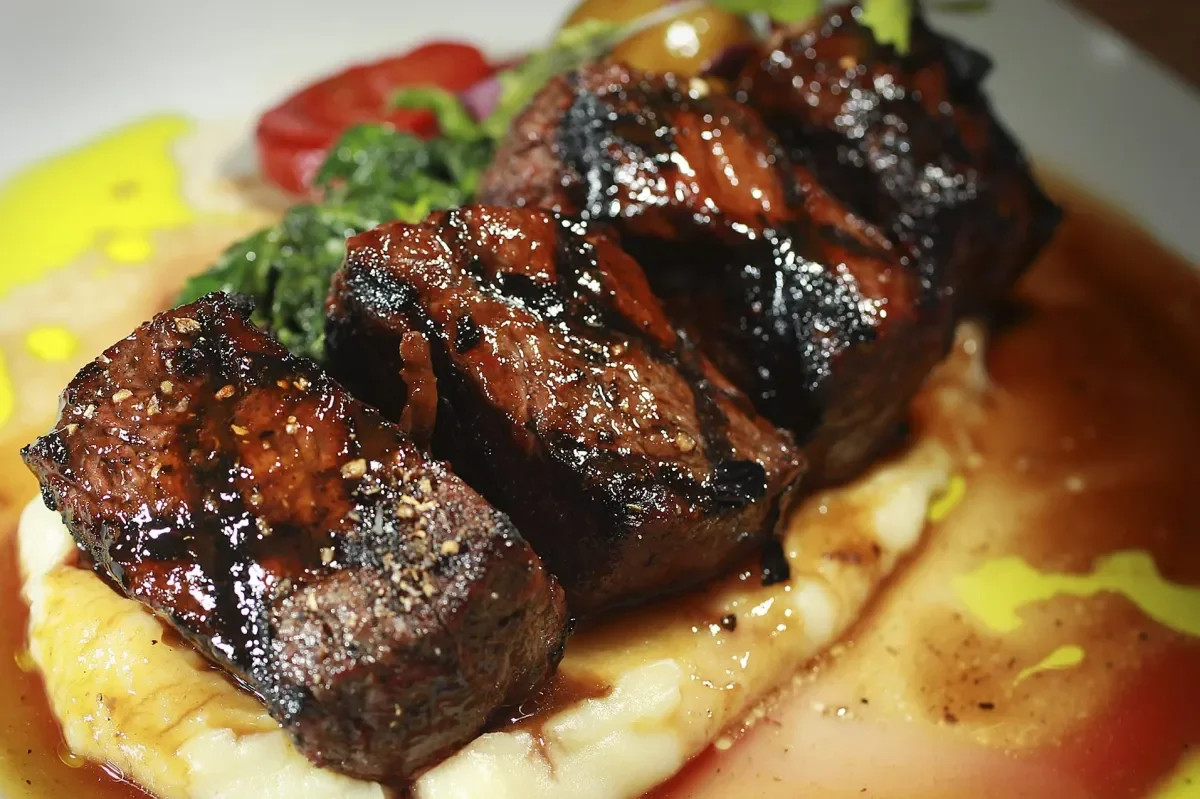
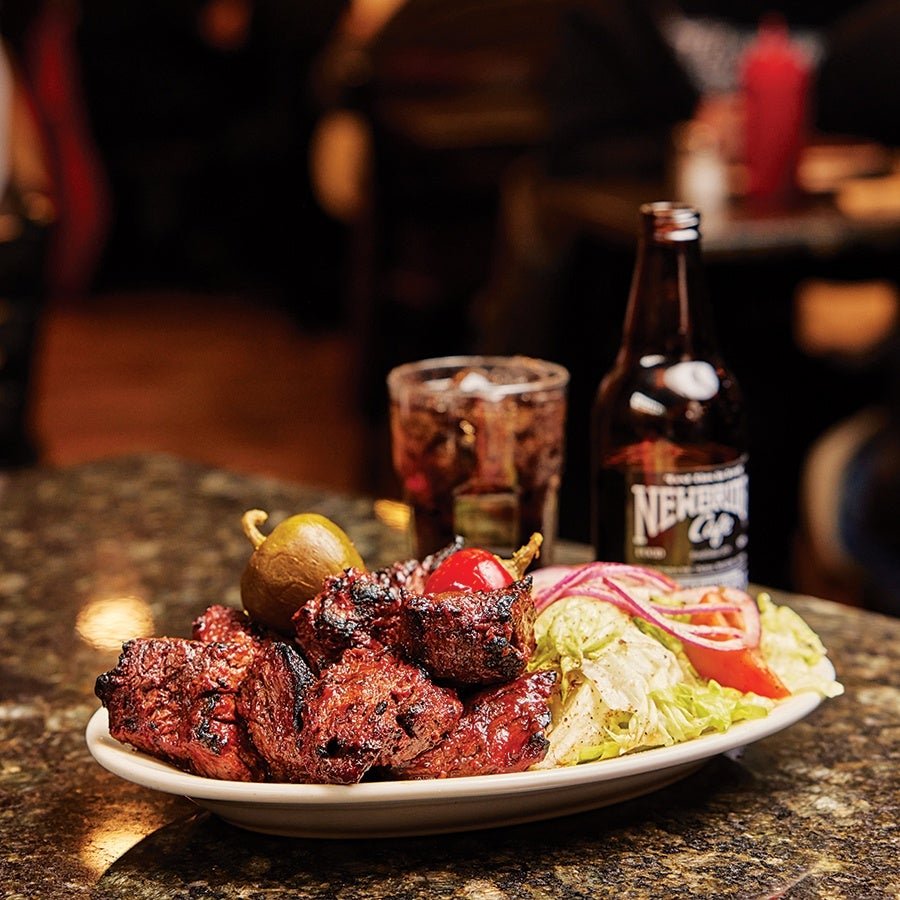
If you order steak tips anywhere else, you’ll be served beef stew meat. In Boston, steak tips are thick, charred, heavily marinated chunks of sirloin flap meat. They are the king of New England comfort food. If a pub doesn't have steak tips on the menu, can you even legally call it a pub?
4. Rotaries and the Boston Left 🚦
The Rotary
While the rest of the world calls it a "roundabout," it is called a Rotary in Boston. Boston rotaries are designed for efficiency and flow. They require a specific kind of confidence; while the person already in the circle has the legal right of way, the person entering has to be decisive. It's a system built on intuition and timing - locals know exactly when to merge without breaking their stride, making it a fast-moving dance that can be intimidating to those used to more cautious traffic patterns
The Boston Left
This is a maneuver every newcomer needs to be aware of for their own safety. In many places, you'd expect oncoming traffic to wait for you if you're going straight and they're turning left. However, in Boston, you might see the first car in the left-turn lane "jump" the light, flooring it the second the light hits green to clear the intersection before the straight-moving traffic even starts. While most Boston drivers are courteous and follow the rules, this move is a common way for more aggressive drivers to manifest their impatience. It's an unspoken "Olympic sport" at certain intersections, so even if you have the right of way, pay close attention when the light changes . Expecting the "Boston Left" will save you a lot of heart palpitations (and potentially a fender-bender).
5. The Language: Nicknames & Town Names 🗣️
Boston's nickname culture
If you’re from outside the US or UK, you might be surprised to know that your Bostonian friend, Jack, whom you’ve known for years, is actually “John” by birth. You might not understand the point of calling him “Jack” since it takes just as much effort to say “John“, but it just is.
While nickname traditions like these aren’t specifically a New England thing (they come from a historic English tradition), you’ll discover that much of Boston retains this culture.
These are some common examples you should know:
James = Jim or Jay
Richard = Dick
John = Jack
William = Bill
Edward = Ted
Now that you can’t unlearn this, know that Dick’s Sporting Goods was founded by Richard Stack in Binghamton, NY, and the Bill Gates who co-founded Microsoft was born William Henry Gates III!
Town pronunciations
The Boston accent is known for dropping the ‘R' and replacing it with an “H”. “Hah-vahd”, for Harvard. It's distinct and has gone viral.
To get around, these are some town names that you should know:
Worcester = Woo-stir (or Woos-tah)
Quincy = Quin-zy (It's a 'Z', never a 'C')
Woburn = Woo-bun
Haverhill = Hay-vrul
Reading = Read-ing (like the past tense of read)
Stoneham = Stone-em)
Concord = Conquered)
Or better, watch this video and pay heed to Matt Damon:
6. The Boston cream pie that is not a pie 🥧
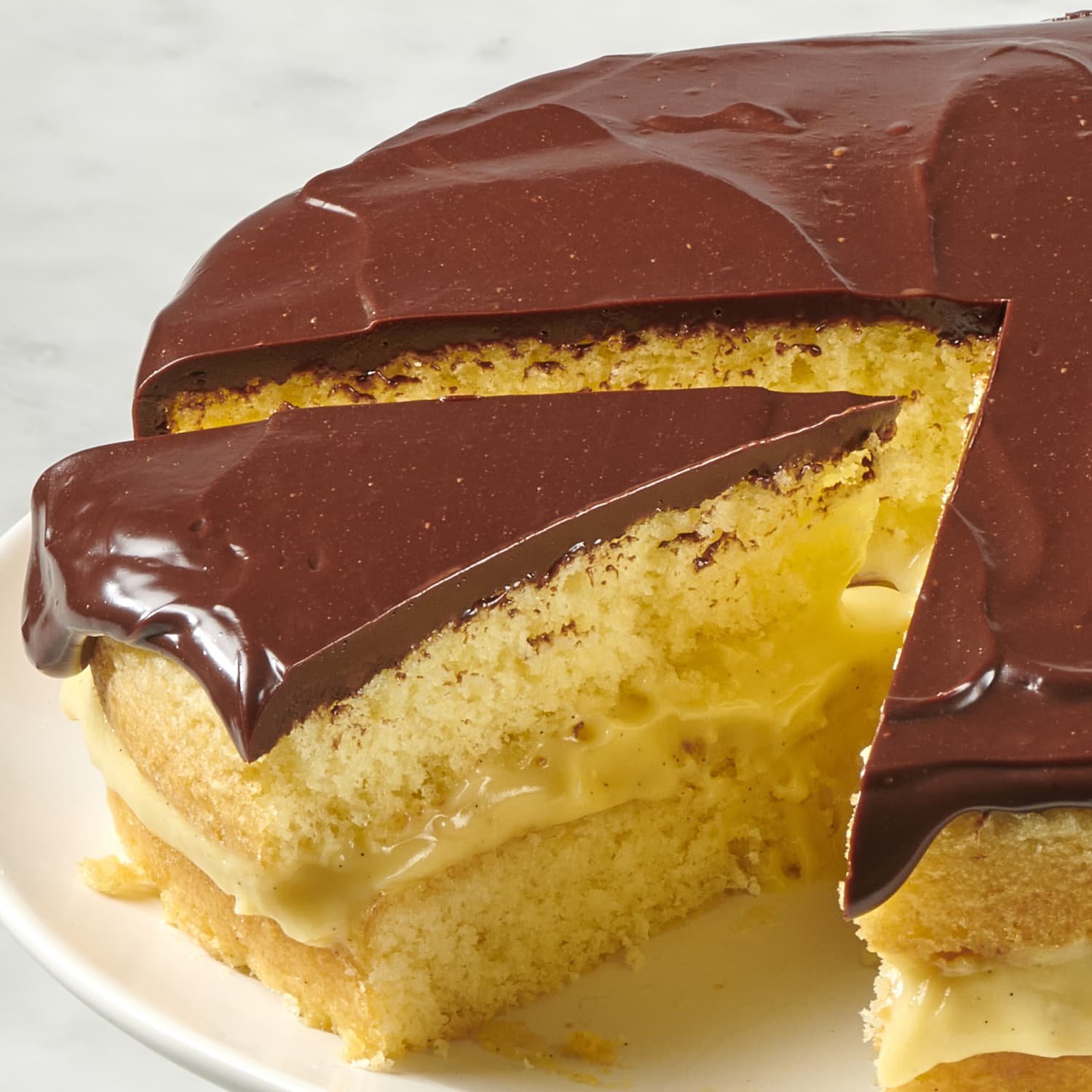
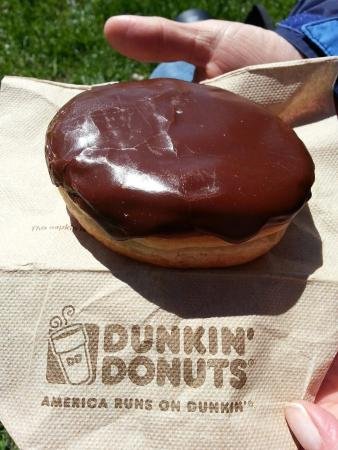
The Boston Cream pie has been the official state dessert since 1996 and surprise, it’s a cake!
It consists of two layers of sponge cake, vanilla custard and chocolate ganache. No crust. No fruit. 100% cake. So why have we been calling it a pie for nearly 170 years? Back in 1856, when the Parker House Hotel first served it, the cake was baked in pans that were referred to as "pie pans" at the time. Bostonians have simply refused to update the vocabulary.
Here’s the truth too: Bostonians hardly crave the original pie from Parker House Hotel. We eat the donut version at Dunkin’.